
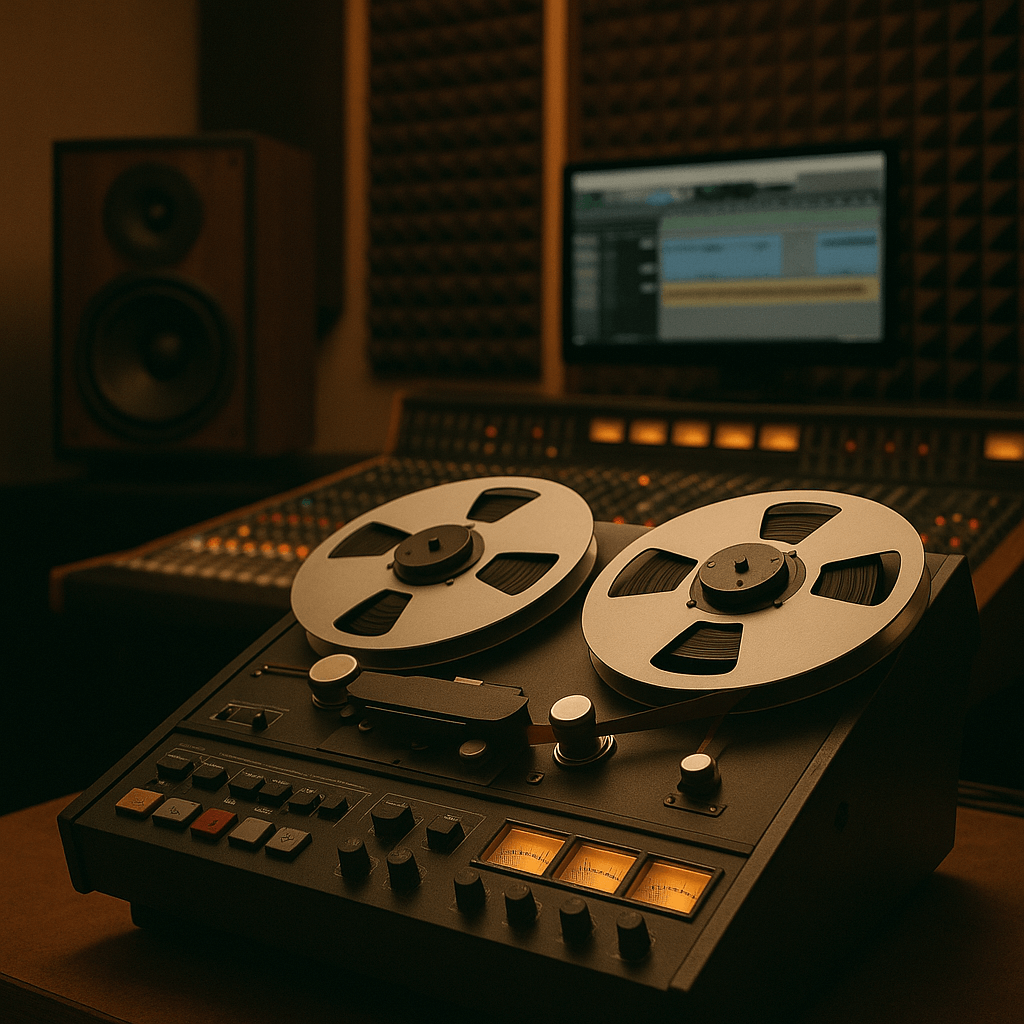
 But with the advent of digital audio, everything changed. The noise floor didn't just drop; it plummeted into a realm of near inaudibility, fundamentally redefining our relationship with sound. Today, the challenge isn't just about making a recording sound good; it's about making it so clean, so pure, that the only noise you hear is the one you created. This is where the journey from the studio to the listening room becomes critical, and it's a journey where every piece of equipment matters. For us at Dekoni Audio, it's about pushing the boundaries of that silence to let the music shine in its purest form, right up to the very last link in your audio chain.
Understanding the Noise Floor: A Primer for Audiophiles and Professionals
At its simplest, the noise floor is the sum of all unwanted background noise in an audio system. It's the constant, low-level signal that is always present, even when there's no intended audio playing. In the analogue world, this noise comes from a variety of sources:- Thermal Noise: The random movement of electrons in components like resistors, which generates a tiny, constant electrical signal.
- Electrical Hum: The 50/60 Hz hum from power lines and transformers.
- Mechanical Noise: The physical sounds of a motor, the friction of a needle in a vinyl groove, or the scraping of magnetic tape across a head.
 This is a critical distinction. In the analog past, the recording medium itself was often the loudest noise source. Today, the challenge has shifted to the playback chain: ensuring that the DAC and amplifier are so quiet, so transparent, that they introduce no audible hiss or hum of their own.
The Metrics of Silence: SNR and SINAD
When evaluating modern audio equipment, you'll often encounter two key metrics that quantify the noise floor and its impact: Signal-to-Noise Ratio (SNR) and Signal-to-Noise and Distortion (SINAD). SNR is a fundamental measurement. It's the ratio of the desired signal's power to the power of the unwanted noise. A higher SNR means the signal is much louder than the noise, which is exactly what you want. An SNR of 120 dB, for instance, means the signal is 120 dB louder than the noise floor, a level of purity that is effectively imperceptible to the human ear. SINAD takes this a step further by including Total Harmonic Distortion (THD) in the calculation. THD is a measure of the unwanted harmonic frequencies that a component adds to the original signal. In simple terms, it's a measure of the "dirt" the equipment adds to the sound. SINAD, therefore, provides a more comprehensive picture of an audio component's overall transparency, measuring not just the noise but also the distortion it generates. A higher SINAD rating is a badge of honor for a DAC or amplifier, signifying a cleaner, more faithful reproduction of the original audio. The difference between a high-quality DAC and a more budget-oriented one is often starkly revealed in these numbers. While a cheaper DAC might have a respectable SNR, its SINAD might be lower, indicating that it's adding a subtle layer of digital "smear" to the sound. The pursuit of the highest possible SINAD has become a benchmark for excellence in the audiophile community.The Technology Behind the Silence
Achieving an ultralow noise floor and a high SINAD isn't just a matter of using "better parts." It's the result of sophisticated engineering and clever technological implementations. Here are some of the key technologies and design philosophies that are pushing the boundaries of audio fidelity: DAC Technology
- Discrete vs. Delta-Sigma: Most modern DACs use a Delta-Sigma architecture, which is highly efficient at converting digital data. However, a growing number of high-end DACs are moving to a discrete R2R (Resistor Ladder) design. The Holo Audio May DAC is a prime example of this. It uses a custom-designed, fully discrete resistor ladder, which many audiophiles believe provides a more natural, analog-like sound with an incredibly low noise floor and no-oversampling artifacts. The design is complex and expensive, but the results are a sound that is often described as possessing a "liquid" quality with a vanishingly low noise floor.
- Advanced Clocking and Jitter Reduction: A DAC's performance is critically dependent on its internal clock. Any timing errors, known as jitter, can introduce audible distortion. High-end DACs like the Benchmark DAC3 and the RME ADI-2 DAC FS use advanced internal clocking systems with proprietary jitter attenuation technologies. Benchmark's UltraLock3 system, for instance, is designed to virtually eliminate jitter from the incoming digital signal, ensuring the conversion process is as accurate as possible.
- Proprietary Digital Filters: Many companies, like Chord Electronics, develop their own proprietary digital filters and DAC architectures rather than relying on off-the-shelf chips. The Chord Qutest is a great example. It uses a custom FPGA (Field-Programmable Gate Array) to implement Rob Watts' unique WTA (Watts Transient Alignment) filtering technology, which is lauded for its ability to preserve the subtle timing cues in music, resulting in a more realistic and holographic soundstage. This custom approach allows for a level of precision that leads to an exceptionally clean and low-noise output.
Amplifier Technology
- Class D Amplification: Historically, Class A and Class AB amplifiers were the gold standard for high-fidelity audio, but their inefficiency generated a lot of heat, which could be a source of noise. Modern Class D amplifiers, however, have revolutionized the amplifier landscape. They are incredibly efficient, run cool, and, when properly designed, can achieve a noise floor and SINAD that rivals or even surpasses traditional designs. The Hypex NCore modules are a great example of this. They are used by many boutique and high-end manufacturers to create amplifiers that offer staggering power and ultralow distortion, making them a popular choice for those seeking the ultimate in transparency.
- Minimalist Signal Paths: Some of the quietest amplifiers on the market achieve their performance by simply being meticulously engineered with a focus on simplicity. The Benchmark AHB2 power amplifier is a perfect case study. Developed with a pro-audio background, it utilizes a patented THX Achromatic Audio Amplifier (THX AAA) technology that virtually eliminates traditional amplifier distortion, resulting in a SINAD of over 132 dB-an almost unheard-of figure that places it among the quietest amplifiers ever made. Its design is a testament to the idea that the best amplifier is one that adds nothing to the sound.
- Balanced Circuitry: Many high-end amplifiers and DACs, such as the Parasound NewClassic 200 or the Hegel H95, employ a balanced circuit design. This involves using two identical signal paths, one carrying the original signal and the other carrying an inverted copy. Any noise picked up along the way is identical in both paths and is then cancelled out when the signals are recombined, resulting in a cleaner output. This is a crucial technology for professional applications where long cable runs are common, but it also benefits consumer audio by providing a more robust and quiet connection.
 The Final Word: Completing the Chain with Dekoni Audio
Share:
Headphone Acoustics and Why It Matters
Sony WH1000XM5 | Dekoni Audio Replacement Earpads Measurements